

Make work work better
We help enterprise leaders in large, complex organizations improve how work gets done while keeping it moving
What gets in the way?
Everything is a priority
Decisions take too long
Roles and responsibilities aren't clear
Work gets stuck between teams
Stakeholders are pulling your team in different directions
You’re accountable for outcomes that depend on people you don’t manage
Transformations stall
People spend more time navigating the organization than doing the work
These can look like separate problems. Often, they’re connected. The Team Effectiveness Diagnostic can help you see the patterns underneath them.
See where your team is getting stuck
The Team Effectiveness Diagnostic helps you identify the conditions that may be limiting your team’s impact, from competing priorities and unclear decisions to cross-team dependencies and ways of working that no longer fit.
What you’ll get
Respond to 44 short statements about how work actually happens on your team. You get a personalized read across the fourteen areas that determine team effectiveness - scored, prioritized, and specific to what you told us - plus the two areas where investment pays off first.
Scored across 14 areas, grouped into 5 themes
Your two highest-leverage focus areas, and the questions worth asking first
No account needed - results arrive on screen and by email
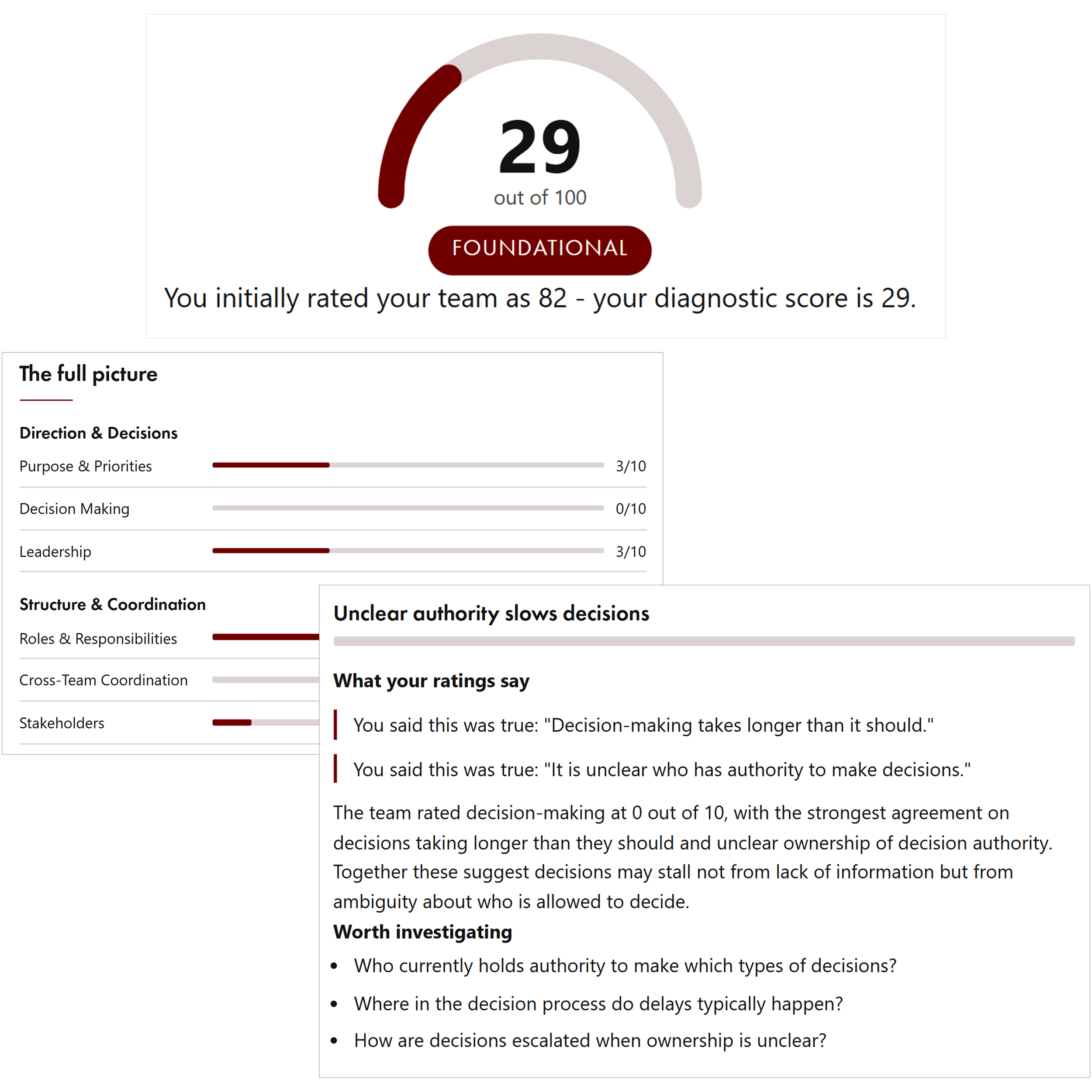
Example results

Better ways of working don’t come from fixing people
Team Impact Method
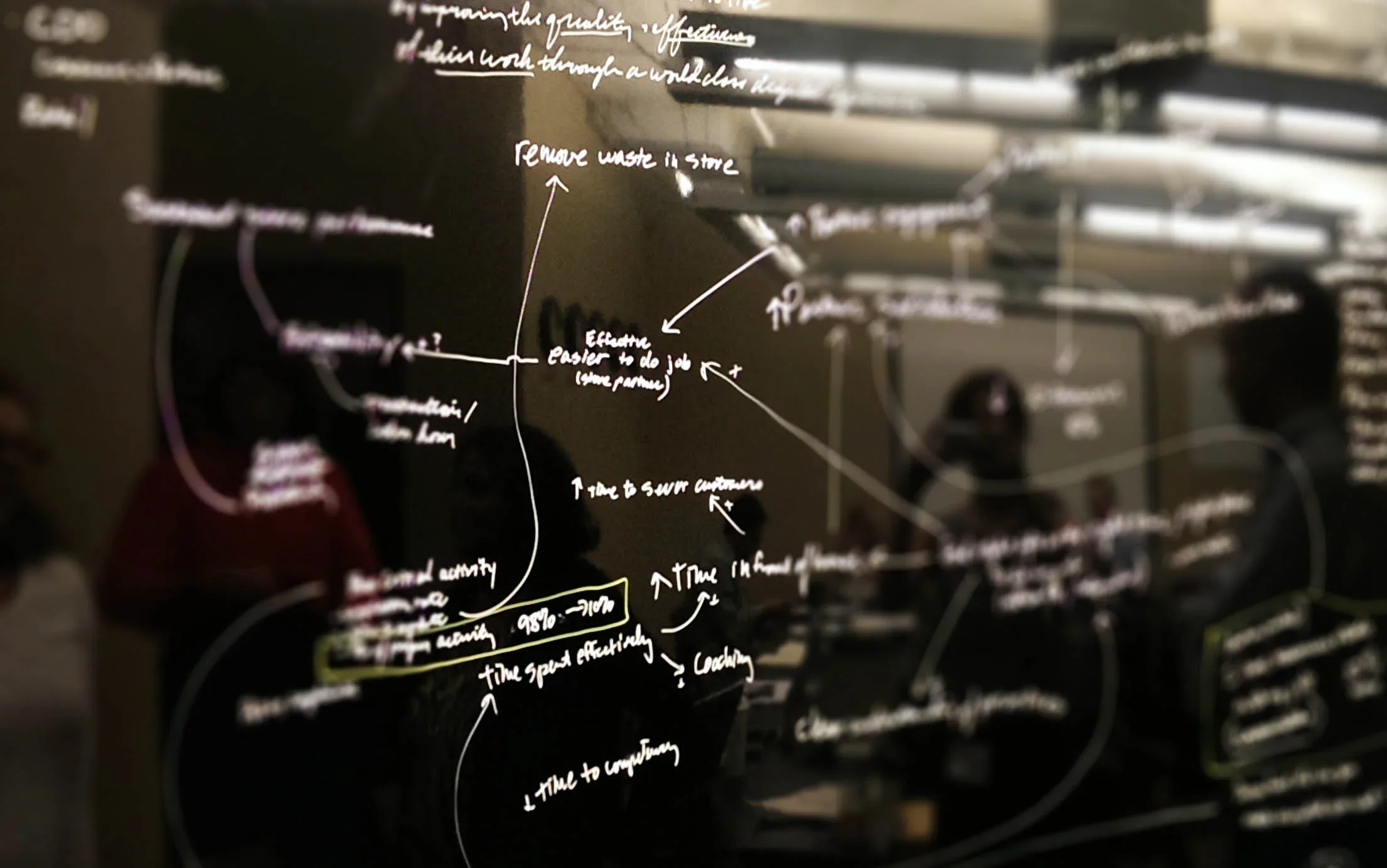
Our Team Impact Method is a human-centered approach to creating measurable, lasting improvements in how work gets done. These five principles guide how we understand problems, design pragmatic improvements, and build lasting capability.
01
Understand the system before changing it
We don't optimize isolated teams. We understand how priorities, decisions, roles, incentives, workflows, technology and culture interact before recommending changes.
02
Design for how work actually happens
Solutions have to fit existing delivery pressures. Improvement shouldn't require stopping the business.
03
Build evidence before scaling
Instead of betting on a large transformation, we create small experiments that generate evidence. If something works, we expand it. If it doesn't, we learn cheaply.
04
Improvement with people, not to people
People doing the work aren't obstacles. They're the best source of understanding. The people closest to the work help shape the improvements.
05
Leave the organization stronger than we found it
Success isn't dependency. Success is building the team's capability to continue improving after we're gone.
Where we put it to work
Shared services leaders sit at the intersection of competing priorities, cross-functional dependencies, changing business needs, and day-to-day delivery. We help them make improvements without putting the work on hold.
Operating model and engagement models
Prioritization and governance
Roles and decision rights
Cross-team collaboration
Workflows and processes
Transformation and change
Team capabilities and ways of working
How we can work together
Start with a question, bring people together, or focus on a specific improvement. We shape the work around your situation and what you want to accomplish.
Assessment & Recommendations
Understand where to focus.
We work with you and the people involved to understand what’s working, what’s getting in the way, and where improvement could have the greatest impact.
What you get
Findings grounded in your organization’s experience, with prioritized recommendations and practical next steps.
Workshops & Learning
Help people move forward together.
Bring your team together to build a capability, work through a challenge, or agree on a way forward. We design participatory sessions around your goals and the work people actually do.
What you get
Practical learning, shared agreements, or actionable next steps, depending on the purpose of the session.
Focused Improvement
Improve how work gets done.
Work alongside us to design, try, and refine an improvement to prioritization, decision-making, intake, cross-team coordination, or another area of friction.
What you get
A pragmatic approach shaped with the people involved, tested in real work, and supported by guidance for continued improvement.
Is That Really the Problem?
The problems we hear at work are rarely as simple as they first appear. In our podcast, we unpack familiar workplace frustrations, explore what might be happening underneath them, and consider what you can do next.

Better ways of working don’t come from fixing people
You don’t have to know exactly what the problem is before you talk to us. Figuring that out together is often where our work begins.